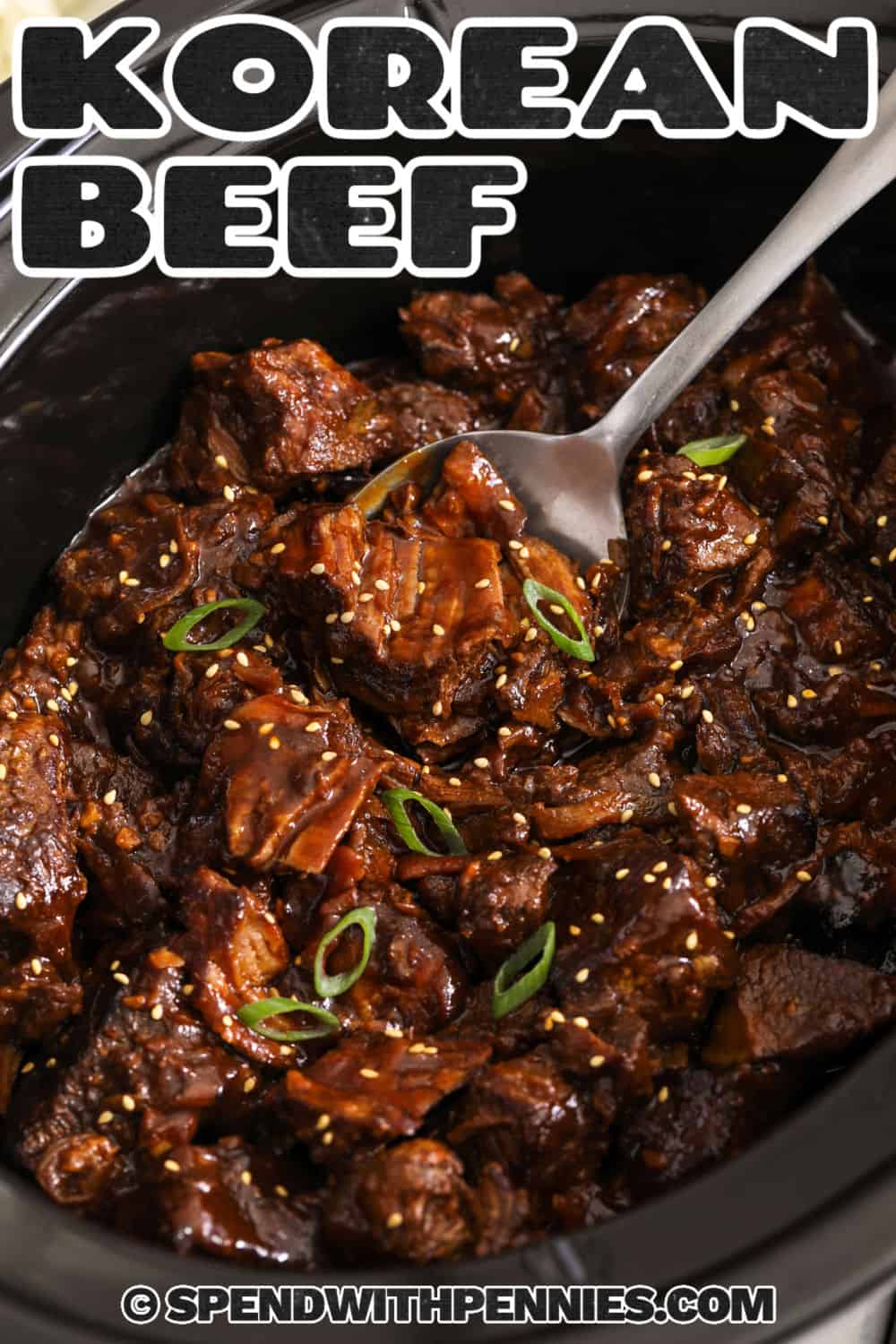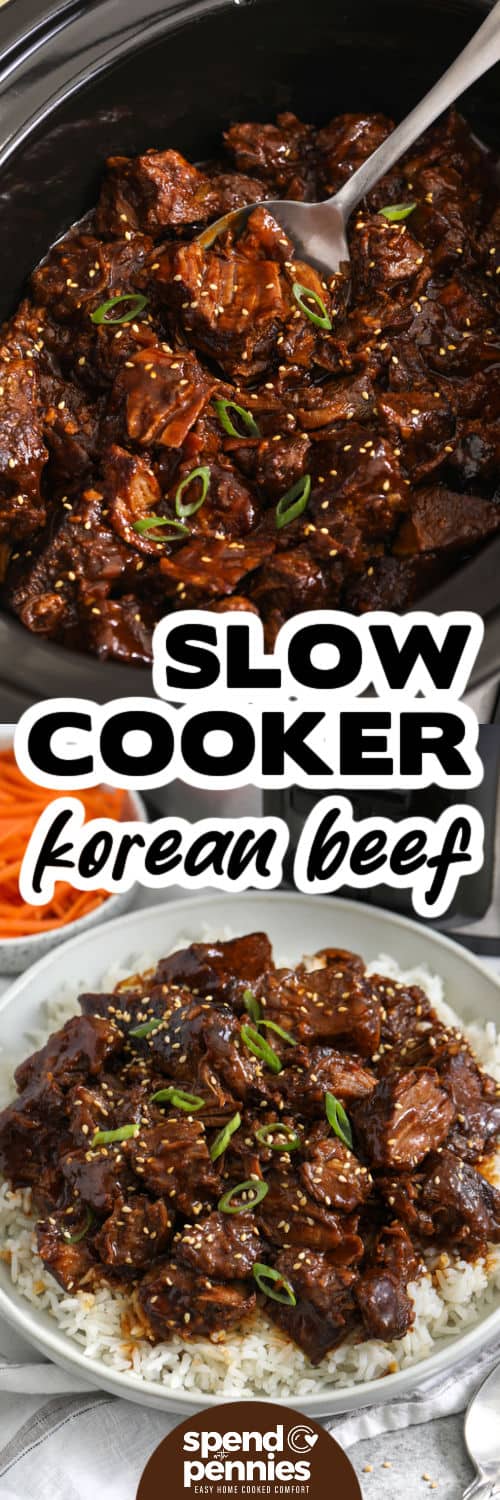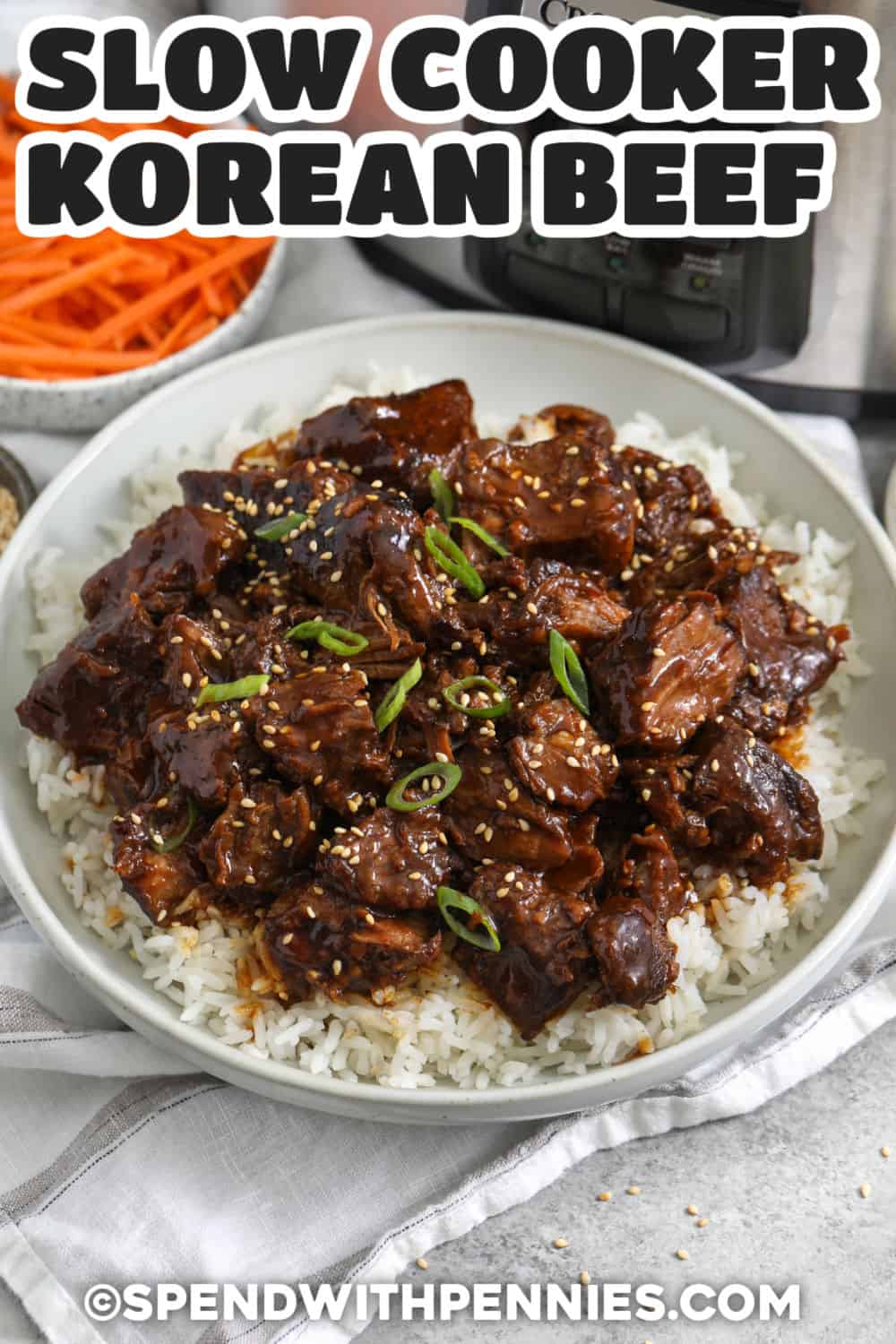
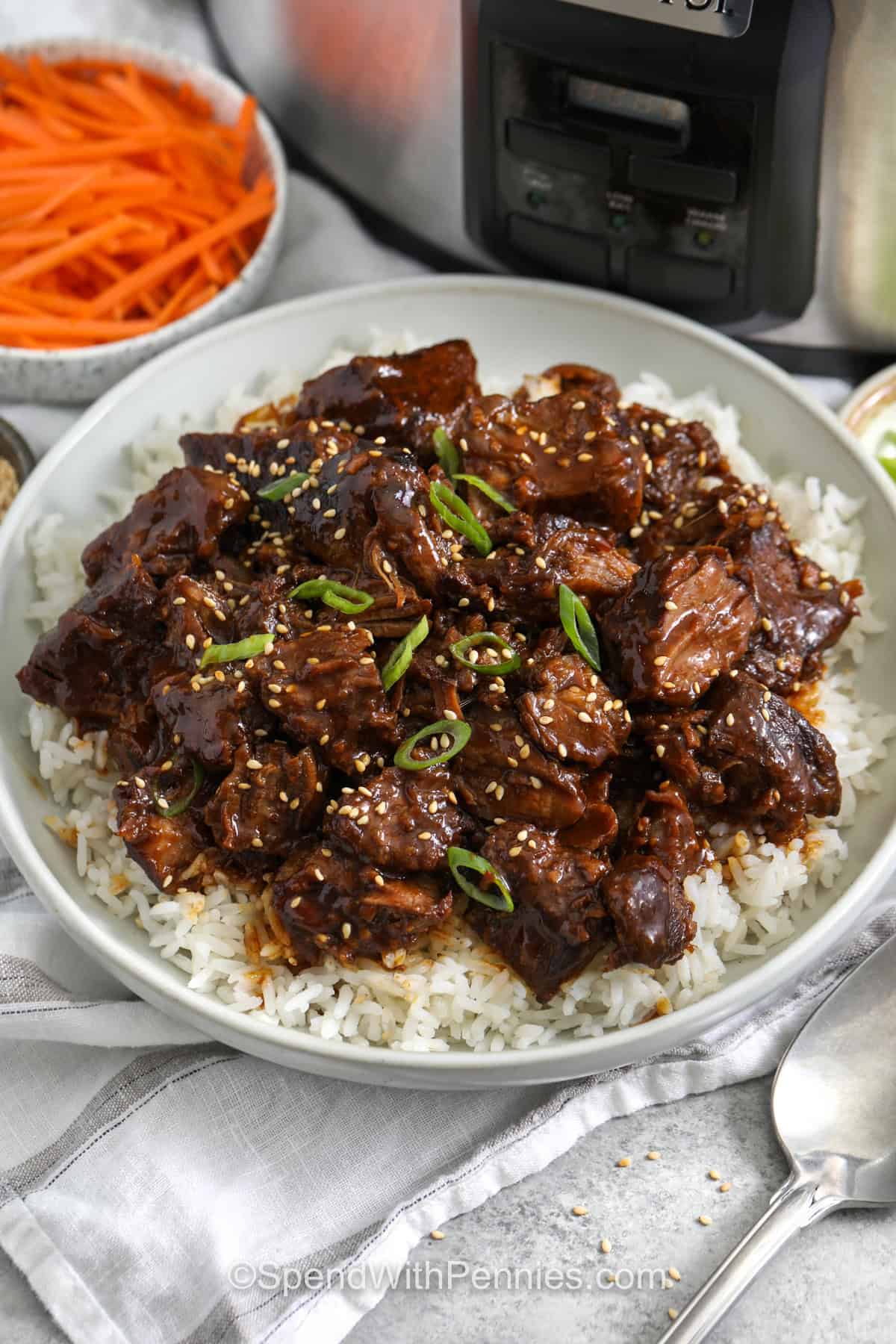
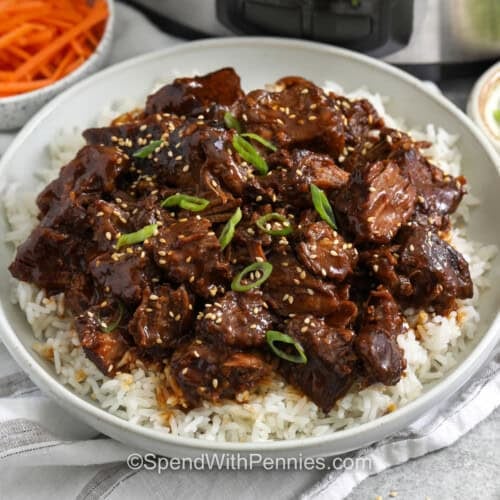
Slow Cooker Korean Beef is packed with melt-in-your-mouth beef coated in a sweet-and-savory gochujang sauce. It cooks low and slow until it’s fork-tender, then gets served over baked rice with all your favorite toppings for an easy dinner the whole family will love.
Try topping with an easy Asian slaw, crispy garlic roasted broccoli, or a crisp Asian cucumber salad.
This post may contain affiliate links. Please read our disclosure policy.


Slow Cooker Korean Beef
- Flavor: The tender beef is coated in a rich gochujang sauce with hints of sesame and ginger, and a little chile heat.
- Why Make It: Slow cooking transforms chuck roast into fork-tender beef with almost no work.
- Tools: A 6-quart slow cooker and a large skillet.

- Total Time:
- 6 hrs 27 mins
- Serves:
- 6

Ingredient Notes
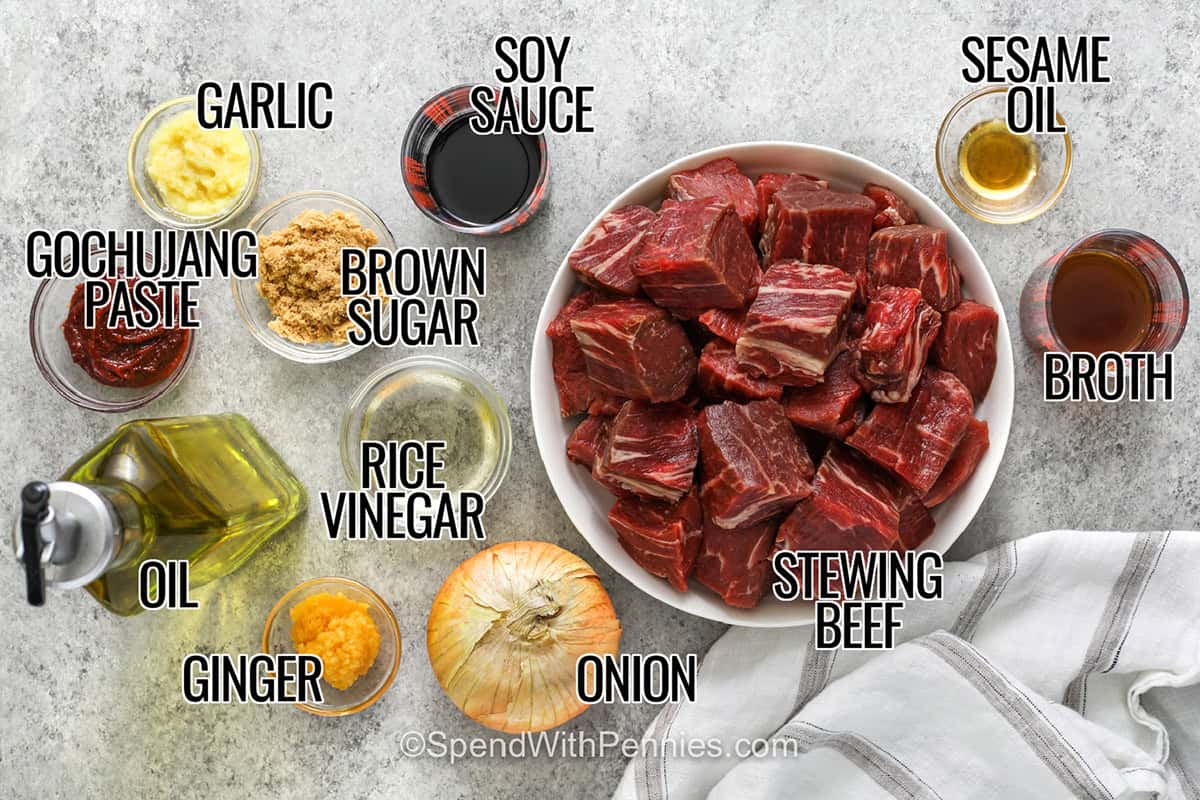
- Beef: Chuck roast is a great choice for tender beef. Cut it into even 1-inch cubes and trim away any large pieces of hard fat. Replace with pre-cut stewing beef for a time-saver.
- Soy Sauce: Use reduced-sodium soy sauce or tamari to keep the sauce from becoming too salty as it cooks down.
- Gochujang Paste: Use the thick Korean fermented chile paste, rather than bottled gochujang sauce. Heat levels vary by brand, so choose a milder variety if you prefer less spice.
- Brown Sugar: Use light or dark brown sugar, with dark brown sugar bringing a richer molasses flavor to the sauce.
- Rice Vinegar: Use unseasoned rice vinegar to add a mild, tangy flavor.
- Fresh Ginger: Opt for fresh ginger, but frozen minced or grated ginger works well as a shortcut.
- Toasted Sesame Oil: Regular sesame oil can be used, but it has a milder flavor.
- Cornstarch: Whisk with cool water before adding it to the hot cooking juices to thicken the sauce smoothly without lumps.
How to Make Slow Cooker Korean Beef
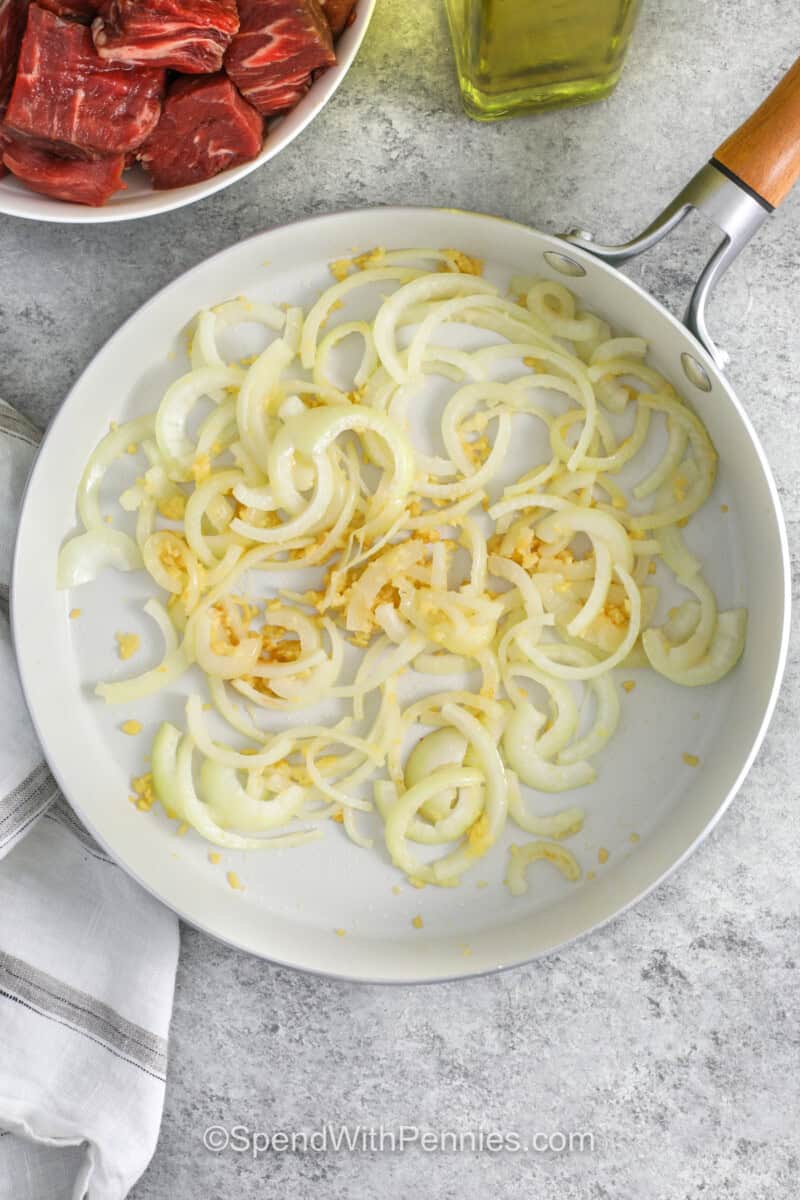
- Soften the onion and garlic (full recipe below).
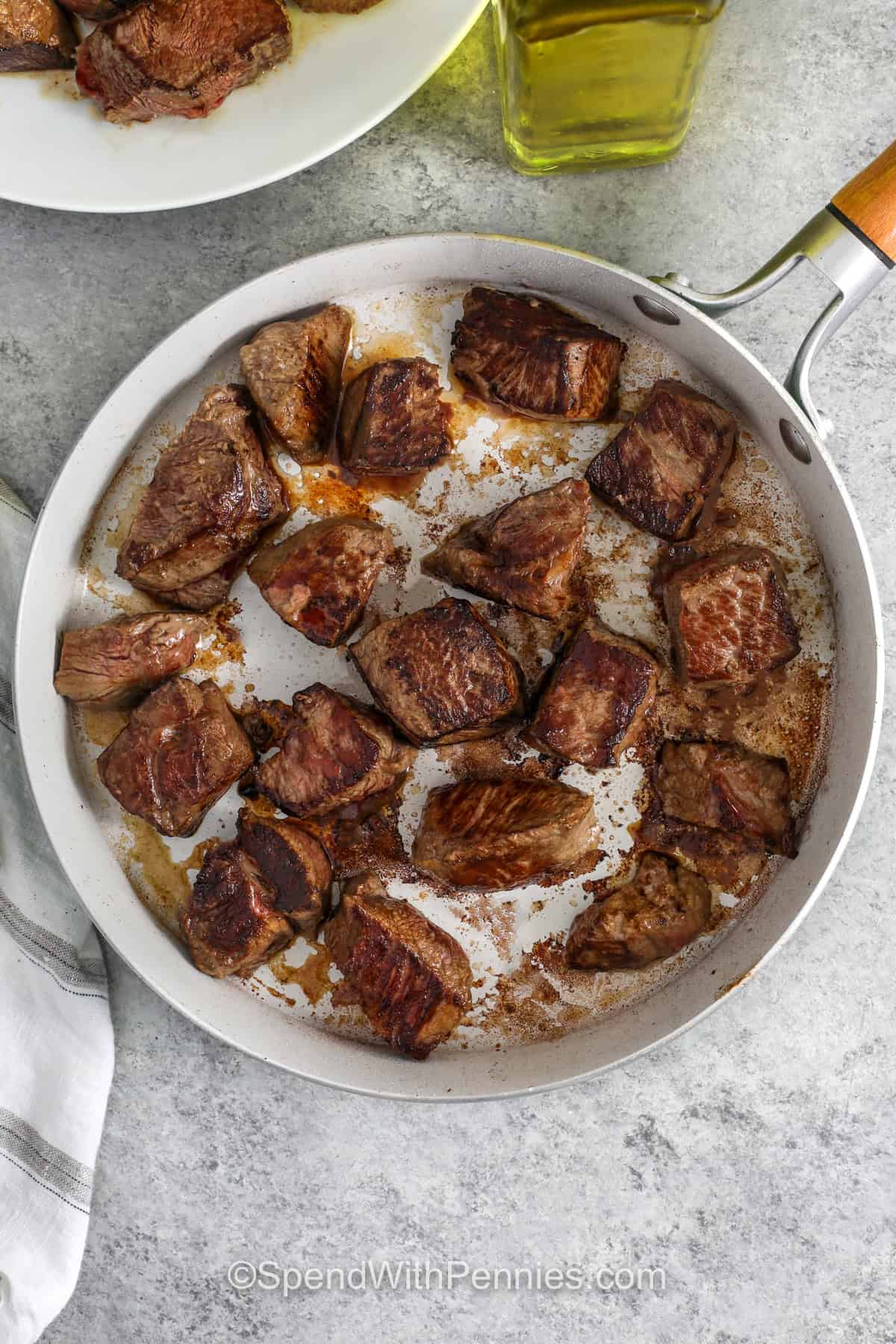
- Brown the beef in batches, and transfer everything to the slow cooker.
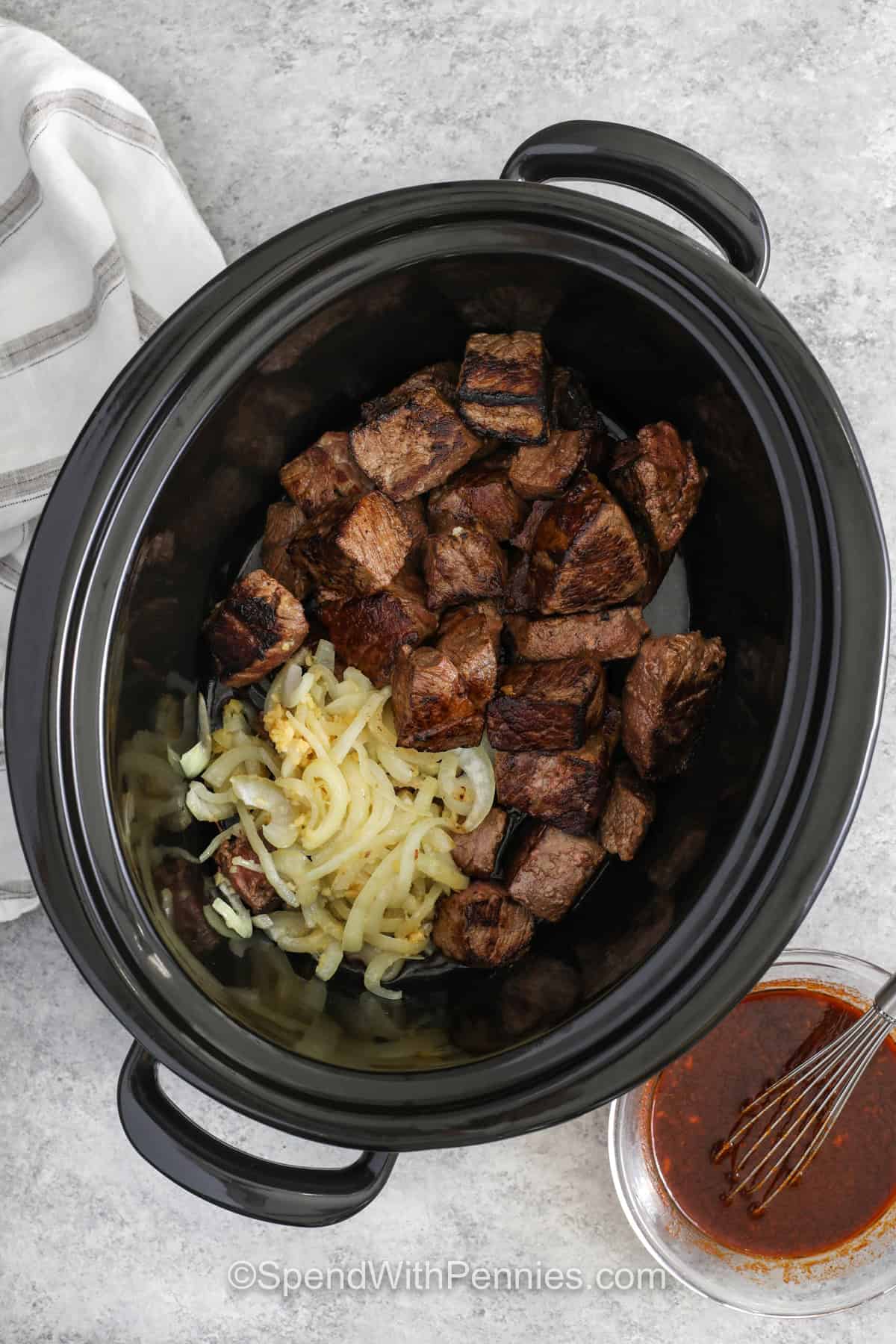
- Whisk the sauce ingredients and pour over the beef. Add the cooked onions and cook on low.
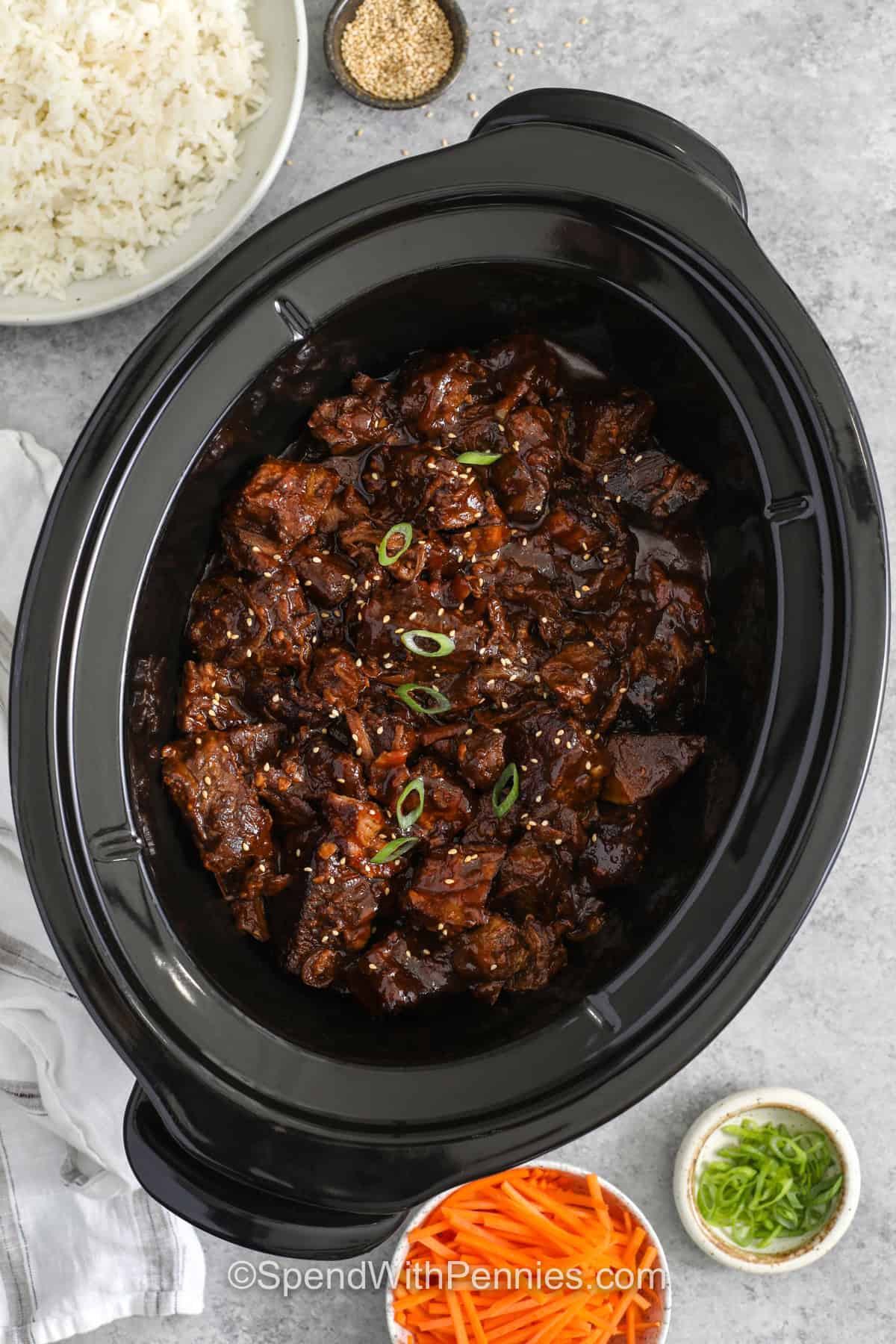
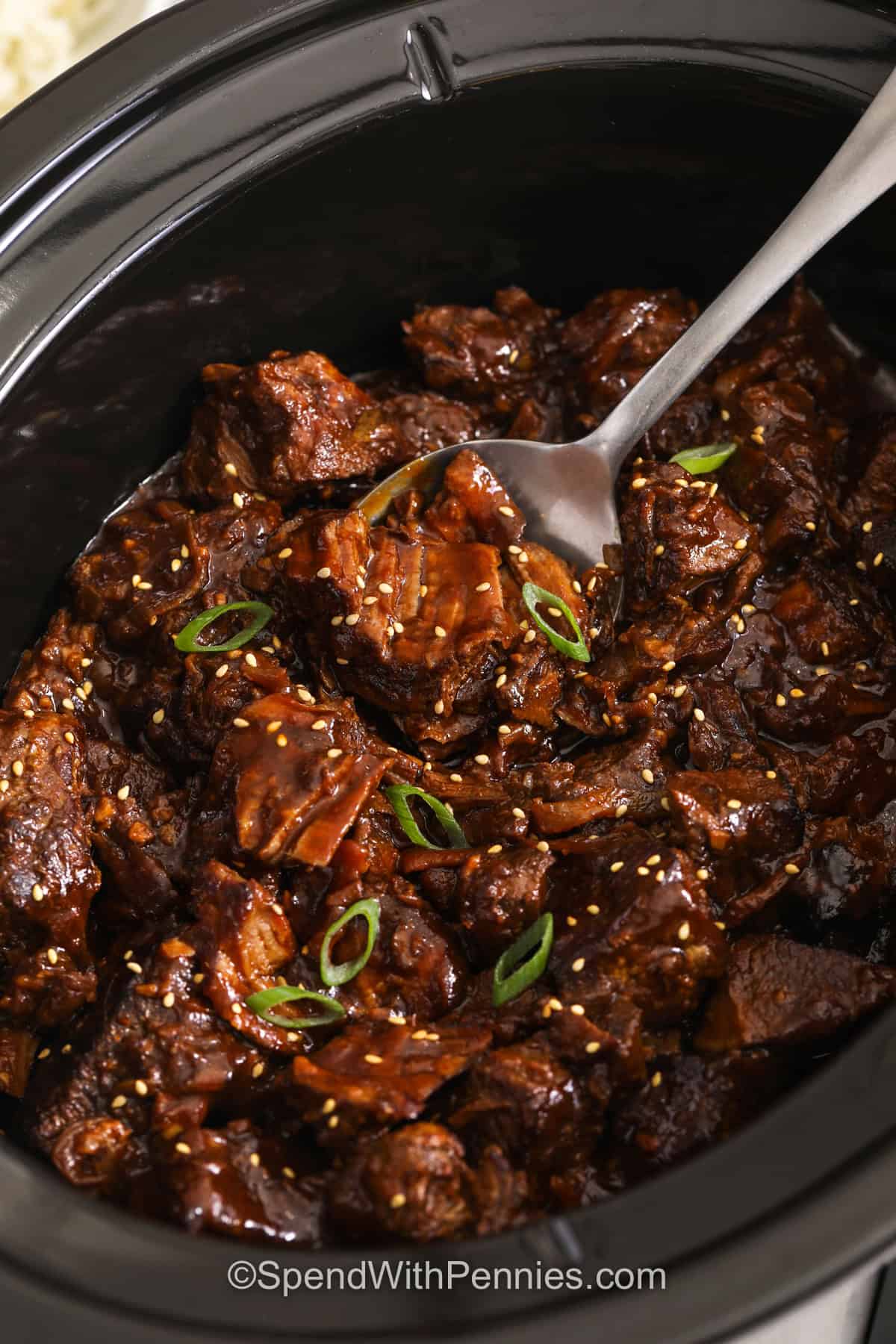
- Remove the beef and gently pull it apart. Thicken with a cornstarch slurry, then return the beef to the sauce.
Storing Leftovers
- Keep leftovers in an airtight container in the refrigerator for up to 4 days and in the freezer for up to 3 months.
- Thaw overnight in the refrigerator. Warm in a saucepan or microwave, adding a splash of broth or water if the sauce is too thick.
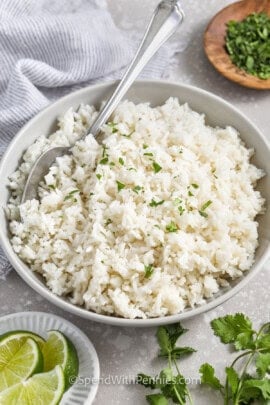
Build the Perfect Beef Bowl


Did you enjoy this Slow Cooker Korean Beef? Leave a comment and rating below.


Slow Cooker Korean Beef


Equipment
Ingredients
- 1 tablespoon vegetable oil or olive oil
- 3 to 4 pounds stewing beef or chuck roast cut into 1-inch cubes
- 1 onion sliced
- 6 cloves garlic minced
- ½ cup beef broth
- ½ cup less sodium soy sauce
- ⅓ cup Gochujang paste more to taste
- ½ cup brown sugar
- ¼ cup rice vinegar
- 2 tablespoons minced fresh ginger
- 2 teaspoons toasted sesame oil
- 1½ tablespoons cornstarch plus 1½ tablespoons water
For Serving
- cooked rice green onion, sesame seeds for garnish
Instructions
- Heat the oil in a large skillet over medium heat. Add the onion and garlic and cook 2 to 3 minutes or until it begins to soften slightly. Transfer to a 6qt slow cooker.
- Increase the heat to medium-high and add more oil if needed. Add the beef, in batches, and cook until browned, about 5 minutes. Add to the slow cooker.
- In a medium bowl, combine broth, soy sauce, gochujang paste, brown sugar, rice vinegar, ginger, and sesame oil. Pour over the beef.
- Cook on low for 6 to 8 hours or until the beef is fork-tender.
- Transfer the beef to a bowl and gently pull the pieces. Cover to keep warm and set aside.
- Mix together cornstarch and 1½ tablespoons of water, and add to the juices in the slow cooker. Whisk together, cover, and turn to HIGH for 15 to 30 minutes or until the sauce is thickened. Return the beef to the slow cooker.
- Serve over rice and garnish as desired.
Notes
Nutrition Information
Nutrition information provided is an estimate and will vary based on cooking methods and brands of ingredients used.
 Course Beef, Main Course
 Cuisine Asian
© SpendWithPennies.com. Content and photographs are copyright protected. Sharing of this recipe is both encouraged and appreciated. Copying and/or pasting full recipes to any social media is strictly prohibited. Please view my photo use policy here.