My famous Zucchini Bread recipe has been made thousands of times! It’s a retro recipe that we’ve loved for years, and most readers agree, it’s delicious!
This recipe has a 4.92-star average from 2,821 ratings (and counting) with thousands of glowing reviews. But a handful of readers have had less-than-perfect results, so we wanted to investigate and bring it back to the test kitchen.
Our Tests and Results
This recipe uses baking soda without buttermilk, vinegar, or other known acidic ingredients, and while we love it as written, some readers have struggled with the rise or flavor.
Since it’s a recipe I’ve used for years, I wanted to test it to see whether we could reproduce the issues readers were experiencing or improve on it.
This post may contain affiliate links. Please read our disclosure policy.
A bit about baking soda:
It is known that baking soda works when mixed with an acid, such as buttermilk or vinegar. That’s true, but it’s not the whole story; baking soda can react in moisture and heat as well (source). Once heated to 122°F (50°C), baking soda begins to break down (source), releasing the same gas bubbles that can make the bread rise. Ayla, my daughter on the Spend with Pennies team, is a chemical engineer who spent some time investigating and confirming this information.
Zucchini is also mildly acidic, adding to the rise.
A few things to note:
- This recipe won’t give you a tall loaf like our banana bread. It’s shorter and very moist, and that’s by design. The batter is dense with zucchini and oil and doesn’t have much gluten structure to hold itself up, so a taller loaf could be too heavy for that structure to support, and risk collapsing the center.
- According to the FDA, zucchini has a pH of 5.69–6.10, making it slightly acidic.
- Baking soda can break down in a moist, hot environment (such as batter) at 122°F creating bubbles.
- We tested a brown sugar version as brown sugar is mildly acidic and can react with baking soda to help baked goods rise.
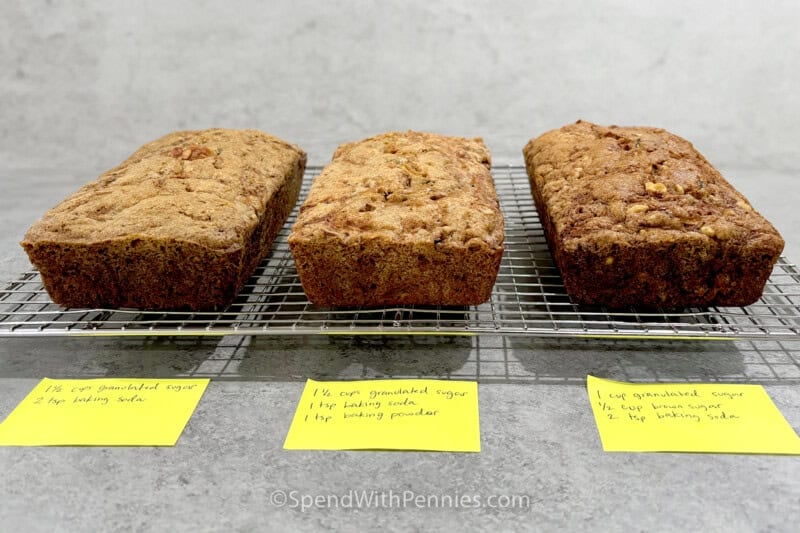
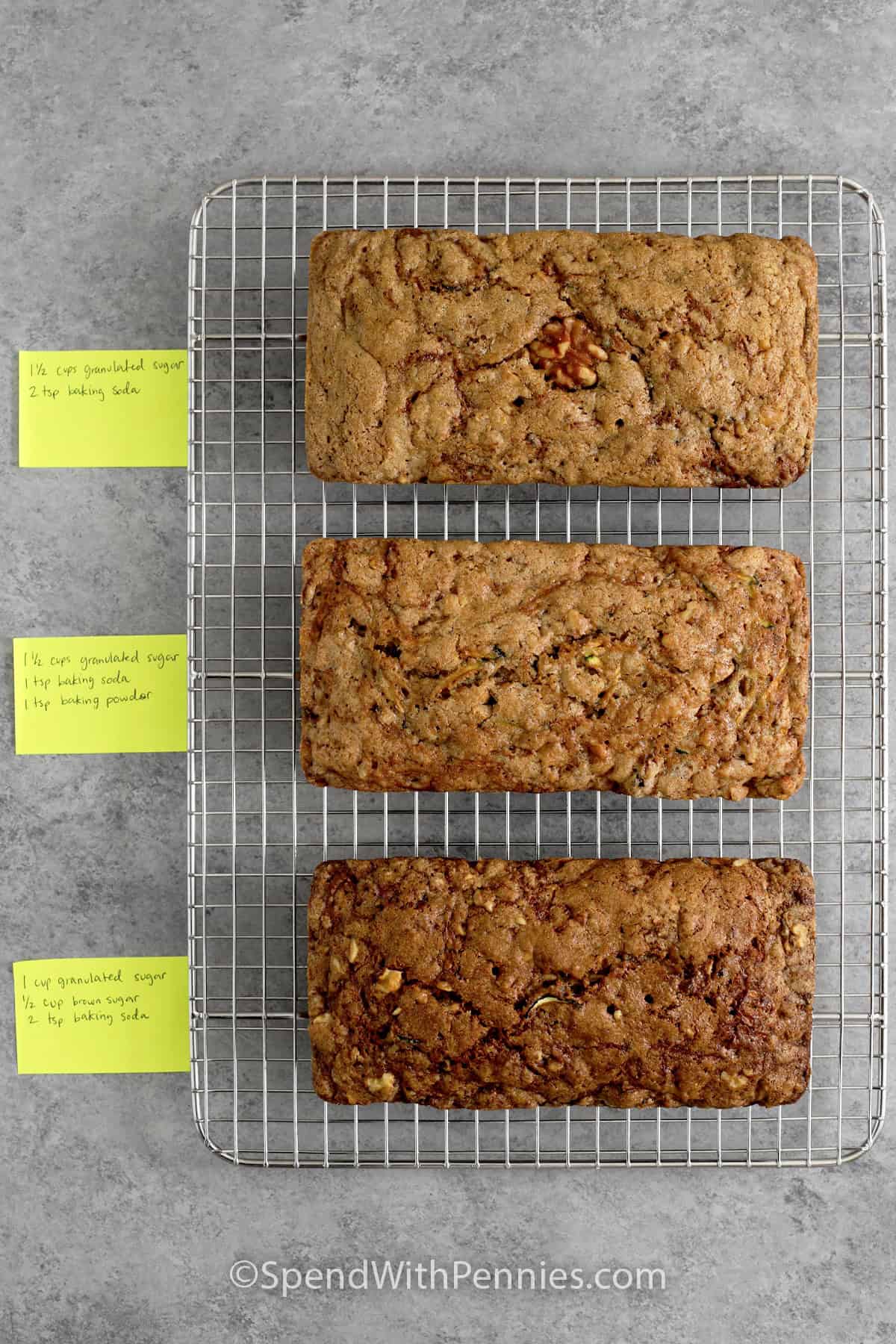
What we tested:
- Original recipe: 1½ cups granulated sugar, 2 teaspoons baking soda
- Split leavener: 1½ cups granulated sugar, 1 teaspoon baking soda + 1 teaspoon baking powder
- Brown sugar swap (brown sugar is slightly acidic): 1 cup granulated sugar + ½ cup brown sugar, 2 teaspoons baking soda.
- Added acid: original recipe with 1 ½ teaspoons of lemon juice to test for extra rise from an acidic ingredient.
Everything else was held constant: same 2 cups flour, same amount of zucchini (not squeezed dry), eggs, oil, vanilla, cinnamon, salt, and walnuts, baked in matching 8×4-inch pans at 350°F for 50–60 minutes.
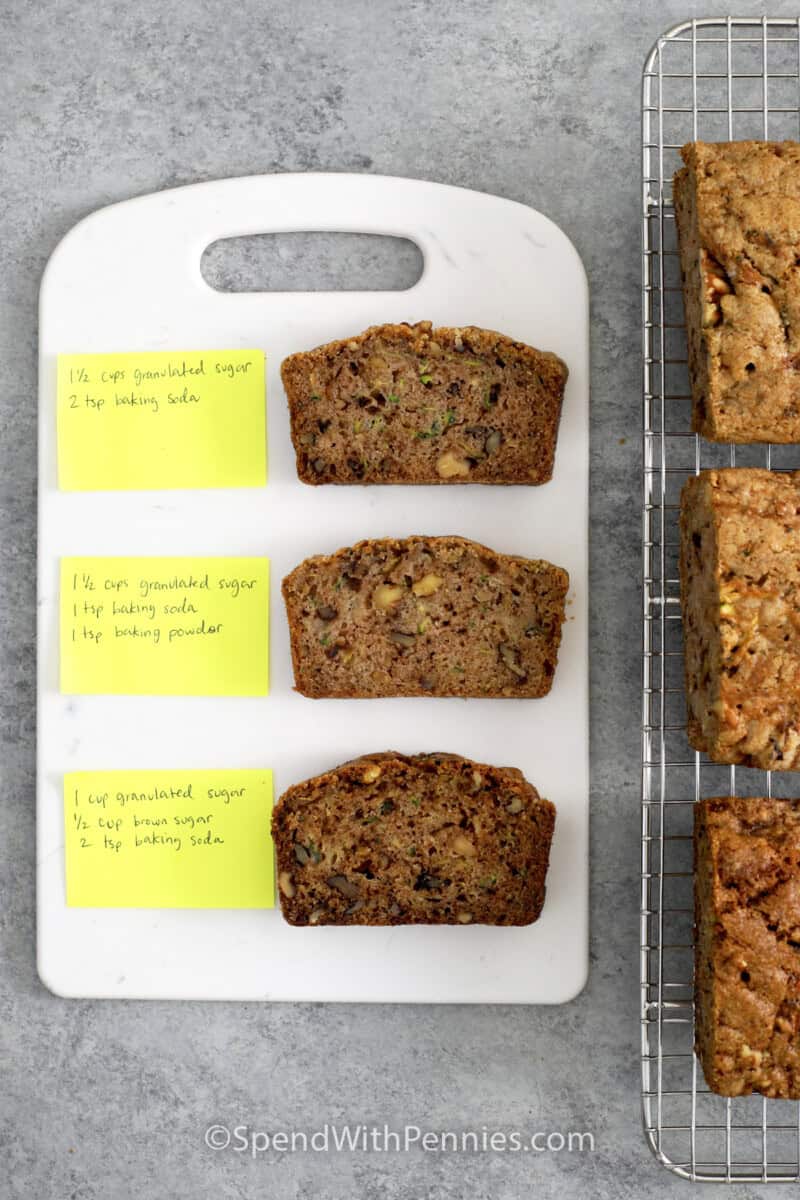
Results:
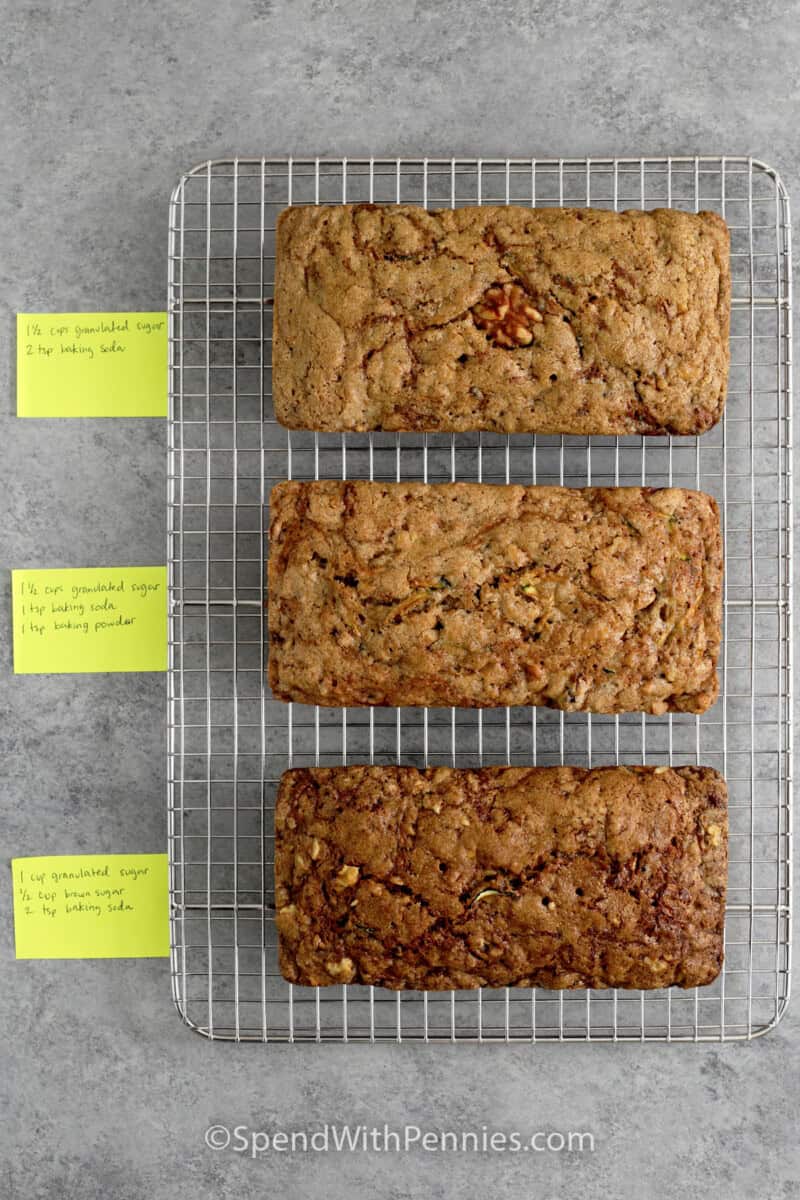
The first three loaves rose to a similar height and cooked evenly, with no sinking or cracking. The crumb looked consistent across all three, moist, evenly textured, with walnuts distributed throughout.
Swapping in baking powder or adding brown sugar did not produce a noticeably better rise or texture compared to the original all-soda version.
- Split levener: The differences were minimal and almost hard to tell they were different at all. If you weren’t eating them side by side, you’d think they were the same.
- Brown sugar addition: The addition of brown sugar produced a slightly darker, crisper crust, but we found its flavor too strong and preferred the texture of the original recipe.
- Added acid: This loaf rose slightly higher, but we found the texture too spongy. This was our least favorite of the four loaves.
The Verdict
Of the five of us in the test kitchen, the overall favorite after sampling the bread on the day of baking, chilled in the fridge, and at room temperature the next day was the original recipe.
The texture and flavor were spot on, and we all loved this version. During these tests, as well as the countless other times we’ve made this recipe, we were unable to detect a baking soda flavor. Our bread rose as expected, producing a moist loaf with a tender crumb.